The question I hear after Hincesti
On almost every trip south, one of my guests reads a road sign and asks me: “So who are the Gagauz, anyway?” It usually happens past Hincesti, once the palace is behind us and the hills outside the window slowly give way to steppe. I got used to the question long ago and now I actually wait for it, because the answer takes the rest of the day.
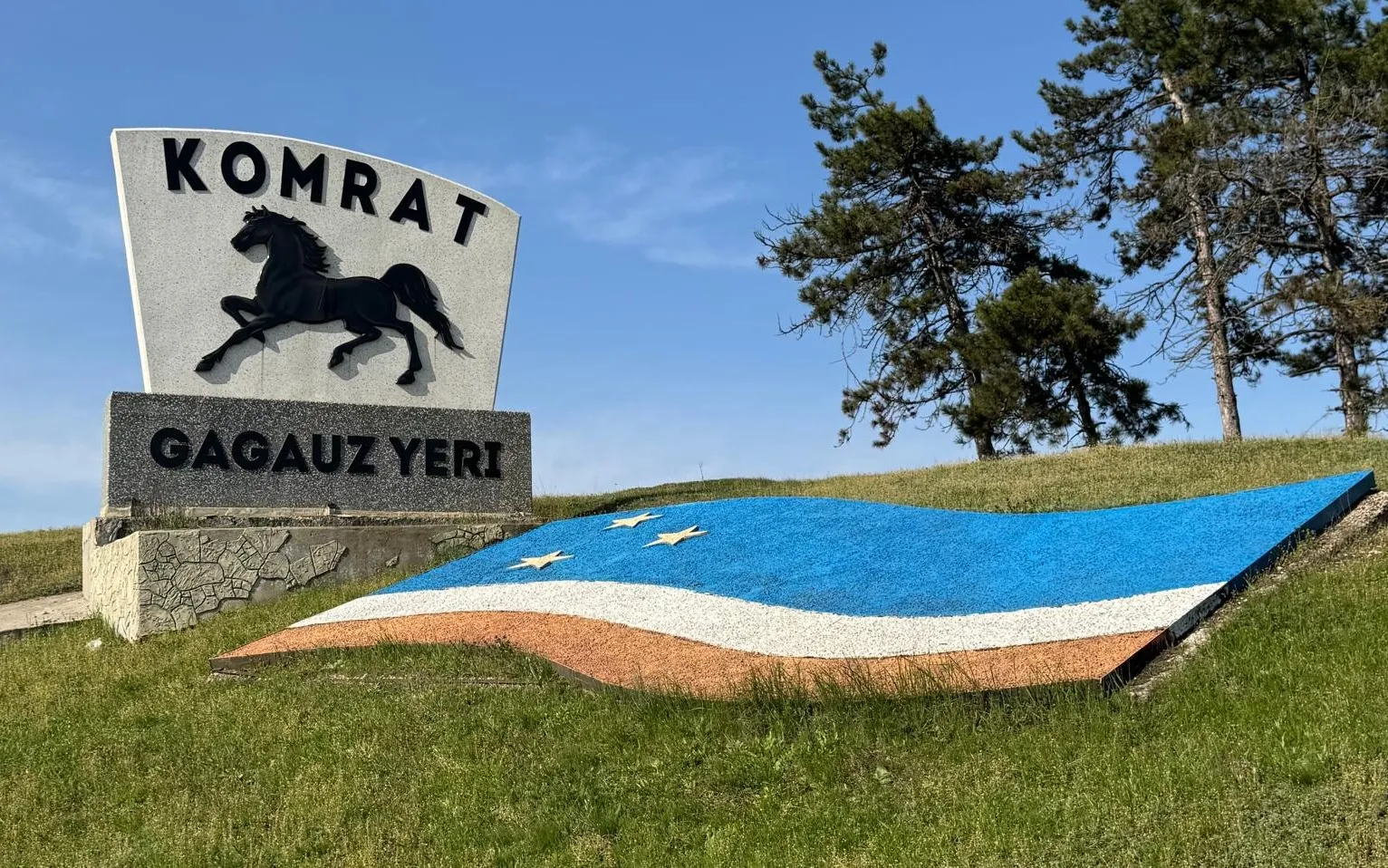
The short version: the Gagauz are a Turkic-speaking people who adopted Christianity and live in southern Moldova. They have their own autonomous region and their own capital, Comrat, about a hundred kilometres from Chișinău. At home people speak Gagauz, in the street often Russian, and lunch smells of the Balkans and Turkey at the same time. Almost nobody who gets into my car knows the Gagauz exist, and to me that's the best reason to go.
It's a long day: eight and a half hours and 240 kilometres. I wouldn't call it a hard one, though. We don't climb any hills or go down underground, and the only walking is an hour through a flat town. Along the way there's a palace, a museum and a very long lunch. Below is how the day works, so you can decide whether it suits you.
First the palace, then the steppe
In the morning I pick you up at your hotel, and about forty-five minutes later we drive into Hincesti, to Manuc Bey Palace. It's a 19th-century estate built for an Armenian merchant and diplomat. Today it's a museum, and the estate is often called one of the most beautiful in the country. We go in for a guided visit, you pay for tickets on site, and after another forty-five minutes we move on.
I deliberately leave the rooms out here. On my other routes the palace is the centre of the day and gets much more time. On this trip it's more of a morning warm-up before the steppe, short and pleasant. If you've already been to the palace, tell me in advance: we'll drive straight south and spend the hour we save in Comrat.
Seventy kilometres south
After Hincesti the road turns south, and for a little over an hour we drive towards Gagauzia. We follow main roads all the way, with no dirt roads through villages, so I'm happy to take big groups south: a twenty-seat Sprinter travels as smoothly as a Prius+ with two guests. While we drive, I tell you the things guidebooks usually leave out. The south of Moldova is borderland in the most literal sense. Over the centuries the borders here ran in different places, and you can still hear it in how people in the villages speak and see it in what they put on the table. Locals still argue about who borrowed what from whom, and that argument is best continued over lunch.
After the hills around Chișinău, the steppe affects people in different ways. Some take out their phones and film the horizon. Others put their phones away and, for the first time on the trip, simply look out of the window. I talk less during this hour than on the rest of the road and pick up again as we get closer to Besalma.
Besalma, one man's museum
Our first stop in Gagauzia is the village of Besalma and the Museum of History and Culture of the Gagauz. It's the main museum of Gagauz culture in the country, founded by the artist and ethnographer Dimitriy Kara-Coban, who collected objects of Gagauz daily life while they were still in use at home. The collection covers the traditions, everyday life and history of the Gagauz. You pay for tickets on site, and we spend about forty-five minutes here.
After the palace in the morning, this is a completely different scale: a village museum where many of the things on display were in people's homes not long ago. I translate the labels and everything we are told there. I know by now that guests walk more slowly here than in the palace, and ask more often what a thing is and what it was for. From Besalma to Comrat is a twenty-minute drive.
A two-hour lunch
We reach Comrat in time for lunch, and we allow two hours for it. That's not a typo in the schedule but a deliberate choice, because Gagauz cooking is what brings people south even when museums don't do much for them. Here they serve gozleme, thin pastry with a filling, best eaten hot, and kavurma, slowly stewed meat. With them come homemade brynza and local wine. You can taste both the Balkans and Turkey in this food, and at the table I explain where each dish came from and how these influences came together in the borderlands.
The south has its own wine, too. In the Budjak steppe, around the Gagauz villages, there are wine estates, and on week-long routes I take guests to one of them. The one-day trip has no separate winery tour, but the wine comes to us anyway, at lunch, and that's usually enough for someone to take a photo of the label.
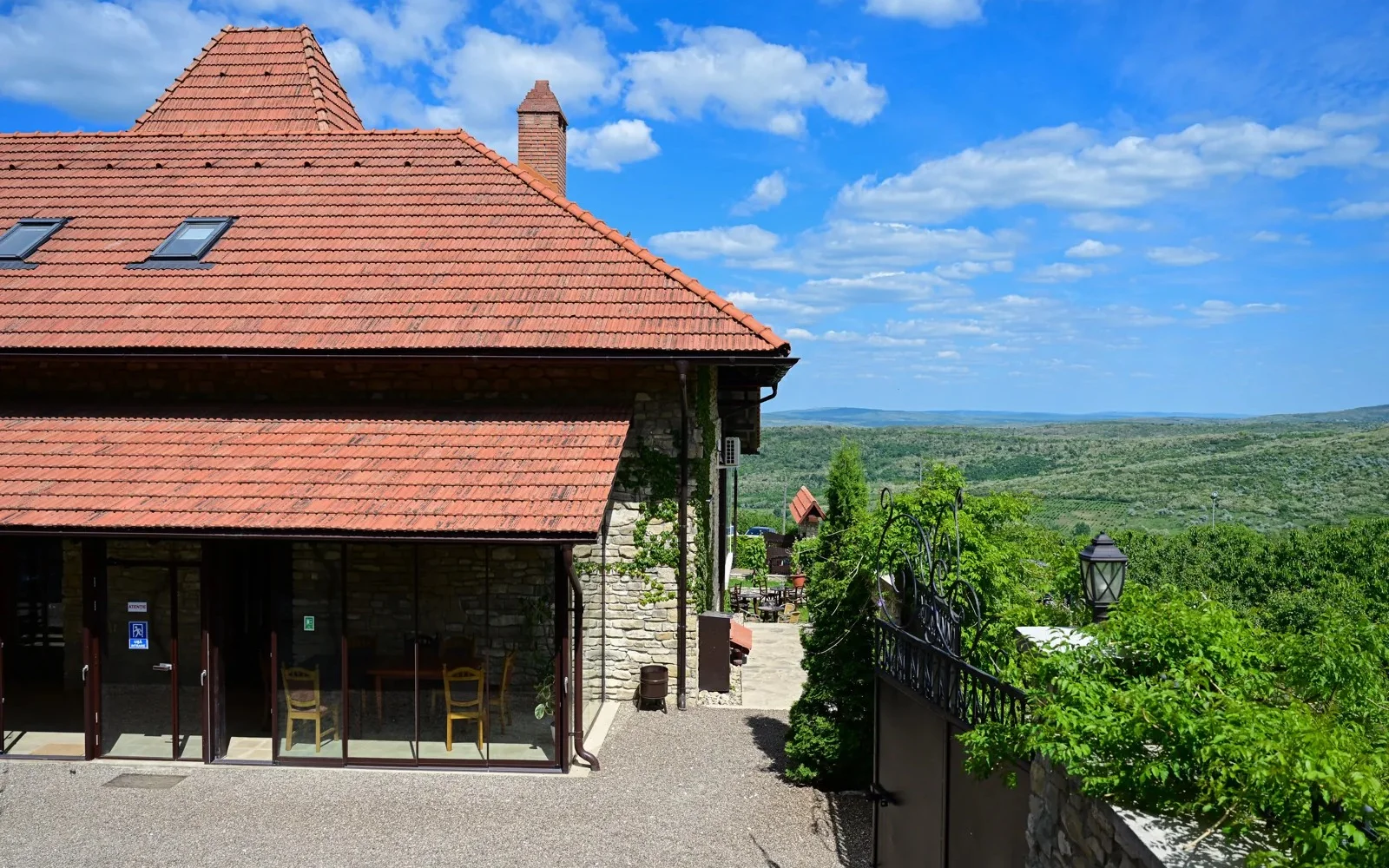
There are two places for lunch, and we pick one before the trip. The first is Comrat Winery: they pour their own wine with the meal, and inside there's a small Soviet-era museum that would be worth a visit on its own. The second is the Gagauz restaurant Sofrasi, if what you want is the food, without a tour. Lunch is optional and paid on site. If long meals aren't your thing, let me know: we'll keep it to an hour and spend the rest of the time walking around town. More often, though, the opposite happens. Guests who wondered that morning why lunch needs two hours ask for ten more minutes by the end of the second.
An hour on foot through a capital
After lunch we go to see Comrat. It's the capital of autonomous Gagauzia, the political and cultural centre of the Gagauz, and also a town whose centre you can explore on foot in about an hour. Its size amuses me a little every time: a capital you can cross end to end between lunch and the drive home. We walk slowly, since after a lunch like that nobody could go faster. I show you the centre and tell you how people here make a living, without political judgements, because my job is to show, and the conclusions are yours. In the street you'll hear both Russian and Gagauz.
In summer the steppe is hot in the afternoon, and I plan for that: I'll move the walk, keep us in the shade, and if it's really scorching we'll walk less and sit longer at the table. Then we get back in the car, and 120 kilometres later, towards evening, I drop you at your hotel. On the way back I put on some quiet music, Gagauz, Moldovan or international. After a Gagauz lunch many people doze off to it, and I don't wake anyone before Chișinău.
What to bring and who this day is for
Any shoes will do, since there are no climbs on this route and the longest walk is an hour through flat Comrat. You'll need cash: tickets for the palace and the museum, lunch and wine are all paid on site, cards aren't much use in the villages, and even in Comrat cash is the safer bet. Rain hardly gets in the way of this day, because the palace, the museum and lunch are all indoors, and we spend only an hour outdoors, in town. From November to March there are fewer tourists and lunches run longer, and this day is only better for it.
Children are welcome, just ask for a child seat when you book. It's for children from nine months up and is already included in the price. The museum gives children plenty to look at, and lunch even more so. For groups, the south is easier to visit than many other areas, because we use main roads throughout, and I'm as happy to bring one guest as a group of twenty. The Toyota Prius+ takes up to four guests, the Opel Vivaro up to six, and the Mercedes Sprinter a group of up to twenty.
The price includes the car with fuel for the whole day, a guide in your language (English, German, Russian or Romanian), pick-up and drop-off anywhere in Chișinău, and water in the car. If you'd prefer Italian, Spanish or Turkish, a guide from my team who speaks it comes with you. On site you pay for:
- tickets to Manuc Bey Palace and to the museum in Besalma;
- lunch and wine in Comrat;
- any shopping, if you want to take something home from a Gagauz village.
I suggest this day to people who have already been to Cricova and Old Orhei and want something beyond the usual sights, and to those who find people more interesting than old stones. If you're in Moldova for a week, I'd give the south a day of its own rather than tacking it onto another route, because you need time for a hundred kilometres each way. On a longer trip, though, the day can stretch: lunch with a Gagauz family and a visit to a wine estate in the steppe. In the one-day version I've kept the essentials. If I'm busy on your date, a guide from my team will lead the same route, and I remain responsible for how it goes.
Why I take people south
My favourite guests to take south are the ones who think they've already figured Moldova out. Down here the country speaks another language, feeds you differently and has a capital that people in Chișinău don't think about every day. I like watching people's idea of the country change over a single trip.
If you get tired, we'll head back early, and if you want to linger at the table, we'll linger. I won't rush anyone. The detailed itinerary, the cars and what's included are on the tour page: Gagauzia: Manuc Bey Palace, Besalma, Comrat. Send me your date and the number of guests, and I'll organise the rest myself.