Why drive this far north
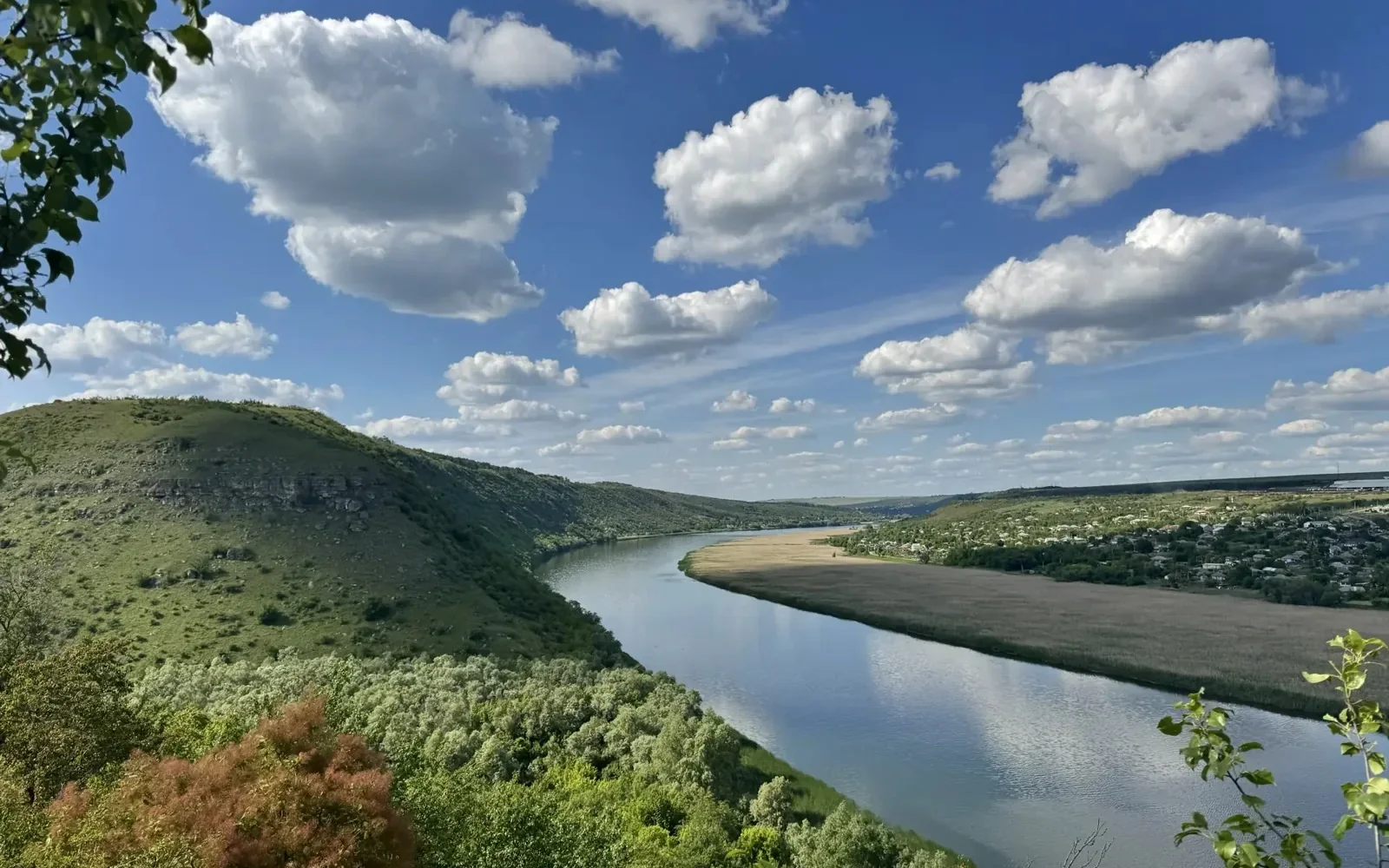
The wall of the Soroca fortress is cold even in July. Guests touch the stone first, then turn to the river, and for a few minutes nobody talks, because the Dniester is wide and slow here and the far bank is already Ukraine. Those minutes by the wall are why I drive people this far north.
This is my longest day trip in Moldova: about ten hours and roughly 320 kilometres there and back. Soroca is 160 kilometres north of Chișinău, and I go no further north in one day. If you've flown in for two days, I'll suggest the classics, Curchi, Old Orhei and Cricova, and I've written a separate article about that day. Soroca is usually for people who have done the classics, don't mind giving a day to the road, and are curious what the country looks like where tourists hardly go.
It's a little over two hours up, with a stop halfway, and an hour and a half back, and I won't pretend the time flies. But the car gives us time to talk, which short trips never have enough of: as the fields roll past, we talk in more depth about the country than on a day with four stops.
I have a personal reason to love this road, too. I was born in a village near Dondușeni, so this is my north. When these fields appear outside the window, guests notice a change in my storytelling, and on the way back they usually tease me about it.
Carpets, halfway there
Soroca is over two hours away, and I don't like doing it in one go, so halfway we turn off to the village of Clișova Nouă and the Arta Rustica carpet museum. It is a museum and a weaving workshop under one roof: carpets hang on the walls, others lie on the looms, and the rooms smell of wool. Forty-five minutes is all it needs. Guests walk in out of politeness, since we've stopped anyway, and walk out with a camera roll full of patterns and one question: how many weeks does a carpet like this take? I know the answer, but I tell them to ask in the workshop, where they explain it better than I can in the car.
The ticket is paid on site, then it's another hour north, and by midday we reach Soroca.
A fortress right at the water
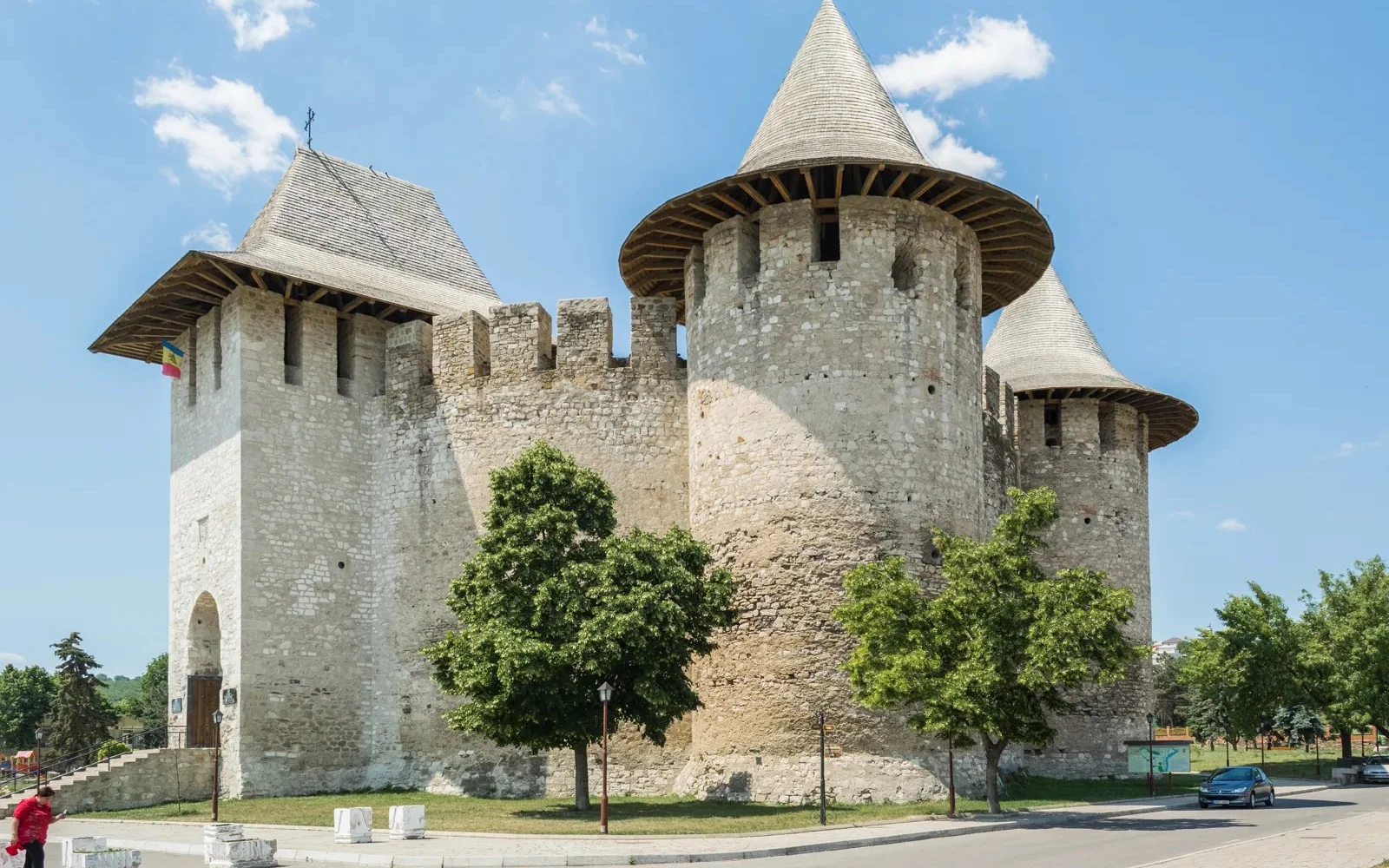
The first hour and a half in town is on foot, starting with the fortress. It is round, with five towers, and so well preserved that you don't need to imagine anything: the walls are intact, you can stand in the courtyard and look around, and after the sun the towers are cool and dark. From the river it looks quite different from from the town. It was built around the turn of the 16th century right on the Dniester, not up on the hill, and who built it, against whom and why in this spot, I tell you inside. That takes about half an hour, then guests explore alone, because it's nice to finish exploring without constant commentary. I tell you what's in the guidebooks and what isn't, and if I don't know an answer, I say so.
Then we walk along the bank, on to the wooden church and through the central park. The park gets on with its life without noticing us: benches, prams, nobody in a hurry, and you can see clearly how the north differs from the middle of the country. To me it feels quieter, with more air between the houses, though that's my impression, not a textbook fact, and you're free to disagree. The town is flat and easy on foot.
After the walk we have lunch in town, optional and paid on site. I translate the menu and make sure you order what they cook well here. It's a simple meal in town, no tastings and no music, and I like it that way: the steps to the Candle are still ahead, so I'd avoid eating until you can't move.
After lunch, we go up
Soroca sits low by the river, and what comes next waits above the town. So in the afternoon we go up twice: first to the houses on the hill, then to the Candle.
Gypsy Hill
First we go up to the neighbourhood above the town that is known far beyond Moldova. The houses here are mansions covered in carvings, each more extravagant than the next, as if every owner built with one eye on the neighbour's house. Guests take photos first, then the questions start, and here there are always more questions than answers. What I know, I tell you; what I don't, I don't make up, and here that matters most of all. People live in these houses, so we walk quietly, don't look in the windows and don't comment out loud. The hill takes about forty-five minutes.
Up to the Candle of Gratitude
The Candle of Gratitude, Lumânarea Recunoștinței in Romanian, stands above the Dniester, and a staircase of about 600 steps leads up to it, 30 to 40 minutes of climbing. There are no entry tickets, and the climb is free. It's the one stretch of the day where steady breathing helps, but any comfortable shoes will do. At the top there is wind, the river below, another country beyond it, and behind you the whole road you drove this morning. For this view, many people put up with over two hours in the car.
In summer I move the climb out of the worst of the heat, and in winter I hurry everyone after lunch so we're up before sunset. If the long climb up the steps is hard for you, or you just don't feel like it, that's easily solved: we drive right up to the Candle, and nobody has to feel they're holding the group back.
Beer if you like, then home
At the end of the day there's a stop I offer but never push: RockScore Brewery. You can have a glass there or take beer away, paid on site. There's no food, though, and no second lunch, and I say so up front so nobody waits for dinner. If you don't drink beer, there's water in the car. If the group is tired and wants to go home, we skip the brewery and drive straight to Chișinău. Nobody will tell you “but it's in the programme”.
The drive back takes an hour and a half and is usually quiet: someone sleeps, someone looks out of the window, and someone finally asks the questions they've saved since morning. In the evening I drop you off wherever suits you in Chișinău.
Shoes, tickets, children and the season
You don't need special shoes, any comfortable pair will do: the town is flat, and the Candle is a 30 to 40 minute climb up a staircase. Water is in the car, a bottle per person.
The price covers the car with fuel for the whole day, a guide in your language, pick-up and drop-off anywhere in Chișinău, and water. If I'm busy on your date, a guide from my team takes the same route, and I remain responsible for the day.
On site, you pay separately for three things:
- tickets to the carpet museum and the fortress;
- lunch in Soroca;
- beer at RockScore, if we stop there.
I lead the day myself in English, German, Russian or Romanian. For Italian, Spanish or Turkish, a guide from my team who speaks it comes with you. If your group speaks two languages, I switch between them through the day, and guests say they barely notice.
You'll spend four to five hours in the car. On the way up we stop at the museum, and on the way back we can call at the brewery or skip it. There's air conditioning and a phone charger, but bring a podcast for the drive home anyway, I won't be offended.
Up to four guests ride in a Toyota Prius+, five or six in an Opel Vivaro, seven to twenty in a Mercedes Sprinter. It's a long day, and nobody should be squeezed in.
Seats for children from nine months are fitted on request and included in the price. Honestly, with small children this day is hard going, there's too much driving. School-age children usually find it more fun than a museum, because there's a fortress with towers, Gypsy Hill and a staircase up to the Candle.
From April to October everything is open, you can see a long way, and the climb is a pleasure. Autumn in the north is my favourite season: the air is clear, and from the top you see further than in summer. From November to March there are hardly any tourists and the fortress is nearly yours alone, but the days are short, so I plan around sunset. I drive this route all year.
The schedule on the tour page is flexible: if you get tired, we head back early, and if you'd like longer by the river, we stay and skip the beer.
My north
I drive this route less often than Transnistria or the wine cellars, but I love it more, and not really because of Soroca itself. It's the journey: ten hours together let us talk about the country the way a short day never does, and by evening guests know where I was born and why I call this road the road home. On week-long routes I plan a night in Soroca and lunch with a local family, but that's another story.
If you've seen the classics and want a day that widens your picture of the country, write to me. The detailed itinerary and the booking form are on the tour page, and all I need is the date, the number of guests and your language to tell you whether I'm free and how I'll shape the day around your pace.