This is the trip I'm asked for most, and almost everyone adds: “Just don't make us drive it ourselves.” I understand: there's a border, unfamiliar money and uncertainty about photos. In the morning I collect you from your hotel in Chișinău, drive the whole way and speak to the border guards; all I need from you is a passport. A little over an hour later we cross the bridge over the Dniester, and in Tiraspol someone always asks: “Are we still in Moldova?” Technically, yes, but it feels like a different era.
Guests who come here have usually seen the monasteries and wine cellars and want something completely different. Some even fly to Moldova for this day alone. It suits a bigger group too: we use main roads throughout, the walking is on flat avenues, and there are no hills to climb.
The wooden church comes first
Leaving Chișinău, already on the road to Transnistria, we make one short stop, about fifteen minutes. On the edge of the city, in the Village Museum, stands a wooden church almost four hundred years old: at some point it was brought here from a monastery and put back together. I call this stop “Moldova before we cross”: an hour and a half or two later you'll stand before Lenin on a square in Tiraspol, and after the dark timber and the quiet here, the contrast needs no explaining. If you've seen the church on a city tour, feel free to wait in the car, I don't insist on this stop.
The border in a few minutes
Tiraspol is a little over seventy kilometres away, the border roughly halfway. On the drive I tell you how borders moved across this land over the centuries and why the left bank still speaks Russian. So you reach the bridge knowing what you're about to see, and Lenin on the square won't look like a random stage prop.
Crossing the border is simpler than people imagine. We pull up at the post, I hand over the car documents, you show your passports, and a few minutes later we drive on. It can take longer at weekends, which I allow for. Citizens of the EU, the US and almost every other country get a free migration card on entry, which takes about five minutes. Moldovan citizens cross freely with an ID card, no passport needed. The guards speak Russian, so I do the talking. The one thing to know before booking: travellers with Ukrainian passports aren't admitted. Any other passport is fine.
Past the bridge comes what people travel for. Different number plates on the cars, a different currency we'll need to change money for, different names on the street signs. The questions usually start in the car, but I prefer to answer them on the square, where I can point at things.
What surprises guests in Tiraspol
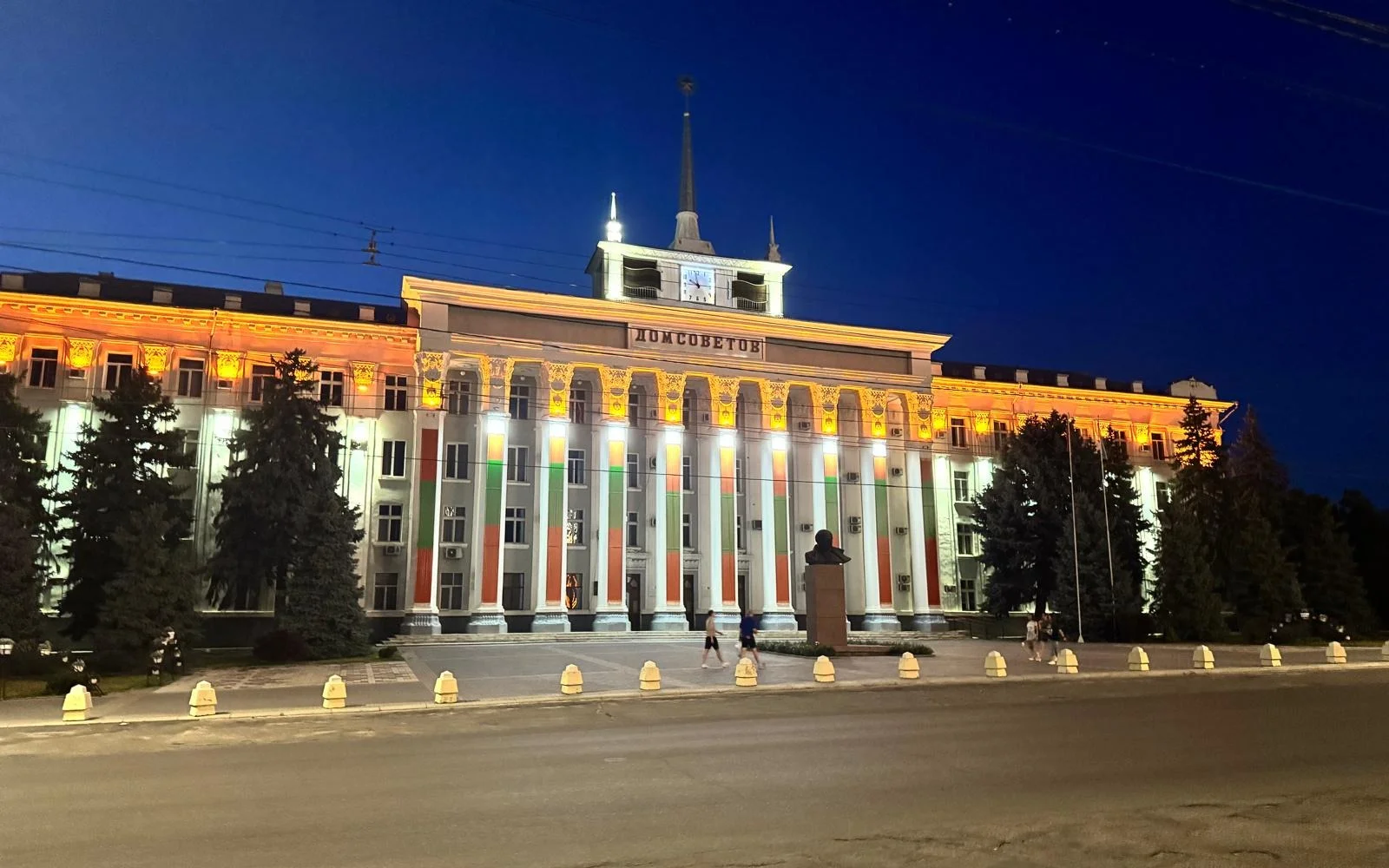
The city was founded in 1792 on Suvorov's orders, and Suvorov himself, on horseback, still greets visitors in the centre. We take two walks in Tiraspol, once through the university quarter and once through the centre, with lunch in between, about two hours on foot in all. The avenues in the centre are so wide you'd like to cross them in two goes; we come out at the House of Soviets with Lenin in front, walk down 25 October Street and past the buildings locals call embassies. And we always stop at the market, no walk through Tiraspol is complete without it. Along the way I explain where all this came from and why it never went away. People on the two banks of the Dniester tell different versions of this history, so I give you both versions and leave the conclusions to you.
Guests expect Lenin, he's in every photo. What surprises them is something else: the city is alive. Prams by the fountain, students on the benches, someone with an ice cream. People come for a Cold War museum and find an ordinary town where people simply live, and that moves them more than any monument. In summer the avenues have little shade at midday, so lunch between the two walks comes just in time.
KVINT, Sheriff and Aquatir, if you wish
Three places can be added to the day if you wish, each agreed separately. The first is KVINT, a brandy distillery operating since 1897 and a source of local pride. There are no cellars; the tour covers the production facilities and brandy stores. The tasting of four or five brandies of different ages is by prior booking only and can't be arranged on the spot, so mention it when you book. More than once I've watched a twenty-five-year-old brandy win over people who had never drunk it before. The second is the Sheriff stadium: in 2021 a club from an unrecognised territory beat Real Madrid at the Bernabéu, and the fan shop next door still remembers it. If football isn't your thing, we just drive past, no time lost. The third is Aquatir, a sturgeon farm where we can stop and taste caviar.
You can pay for KVINT, Sheriff and Aquatir on site, or through me if we agree in advance to include them in the trip price. I'd suggest the second.
Lunch in a canteen
We eat where the locals go at midday: a café set up like a Soviet canteen, with trays, Olivier salad, borsch, a cutlet with mash, pelmeni and kompot. Germans photograph the tray, Americans ask what kompot is and then order a second glass. A cold beer with lunch is an option too. Lunch isn't included and is paid on site, but few people skip it, and I usually eat with you. Next door is a souvenir shop, where your first roubles come in handy.
A monastery and a fortress after lunch
From Tiraspol we drive to Noul Neamț Monastery in Chițcani. It's an active monastery for monks, founded in 1864 and among Moldova's largest; its bell tower, about seventy metres high, is considered the tallest in the country and is visible long before we reach the gate. Monks live here, so we walk quietly and take our time. After the avenues and the House of Soviets the grounds feel strangely calm, and our half hour here seems longer than the clock says. Many guests are surprised, because nobody expects a monastery in Transnistria.
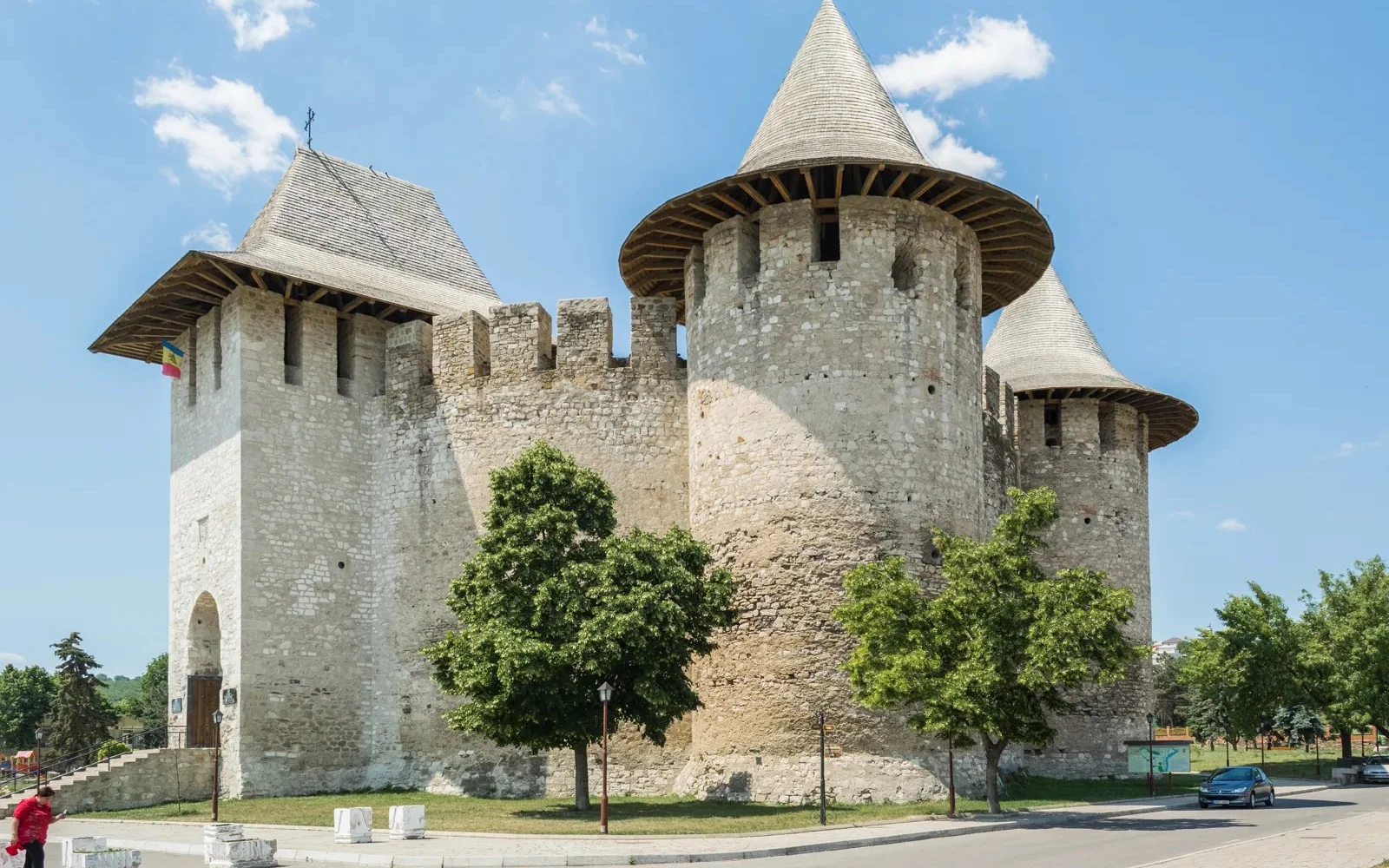
The last stop is Bender and its fortress on the Dniester bank. Bender is closer to Chișinău than Tiraspol, about sixty kilometres from the capital, so I save the fortress for the end of the day to keep the drive home short. The Ottomans built it in the 16th century on the site of an older fortification. It's bigger than the fortress in Soroca and was fought over more often, so I tell the story of the Russo-Turkish wars by the walls and cannons, not in the car. Towards evening the sun lights the walls from the side, the best light for photos all day. Fortress and town take about an hour and a half, the drive to Chișinău about an hour. The return crossing also takes a few minutes, and you'll have dinner back in Chișinău.
What to bring and what to know in advance
Here's what to bring and consider before the trip.
- Your passport, without fail. Any passport except a Ukrainian one will do, and Moldovan citizens only need their ID card. The migration card on entry is free.
- Cash. The Transnistrian rouble is neither exchanged nor accepted outside the territory, so we change just enough money on site for lunch and souvenirs. Exchange offices take euros, dollars and about ten other currencies, but only new notes: worn ones are refused outright.
- Photos. The House of Soviets, Lenin, monuments and streets are fine to photograph, but active military posts and checkpoints are best left alone. I'll tell you when to put your phone away.
- Paid on site. Lunch and entry tickets to the fortress and the monastery. KVINT, Sheriff and Aquatir also on site, or through me if we included them in the trip price in advance.
On safety, I'll say what I say in messages. On paper this is a frozen conflict zone, but everyday life is calm: the 1992 conflict ended over thirty years ago, and tourists come regularly, mostly from Germany, the US and Britain. I check the situation on the day of the trip, not a week before. If I cancel the trip for safety reasons, you get a full refund or we move the day to another date, whichever suits you.
I choose the car to suit your group: a Toyota Prius+ for up to four, an Opel Vivaro for five or six, a Mercedes Sprinter for groups of seven to twenty. The price covers the guide, the car with fuel for the whole day, the tour in your language (English, German, Russian or Romanian), pick-up and drop-off anywhere in Chișinău, and water in the car. If you'd prefer Italian, Spanish or Turkish, a guide from my team who speaks it comes with you. Children are welcome and there are child seats, just tell me in advance; at the fortress they love the cannons, at lunch the kompot. The route works in any season: in winter, without the greenery, Tiraspol looks even more Soviet than in summer, and I've said above how we dodge the heat. If one day isn't enough, there are two- and three-day routes with nights in Tiraspol, which can add Rîbnița, Dubăsari and the villages; we plan the whole route separately.
If we go together
I've been bringing guests here for years, and I still look out of the window as we cross the bridge. For a first trip I'd suggest other days: monasteries, wine cellars, Old Orhei. But this day is special: an hour from Chișinău you step into another time and spend the day among the people who live in it. If I'm busy on your date, a guide from my team drives the same route, and I remain responsible for the day. If you tire early, we head back early; if you want longer at the fortress, we stay. The route, the cars and the booking form are on the tour page: Transnistria in one day.