
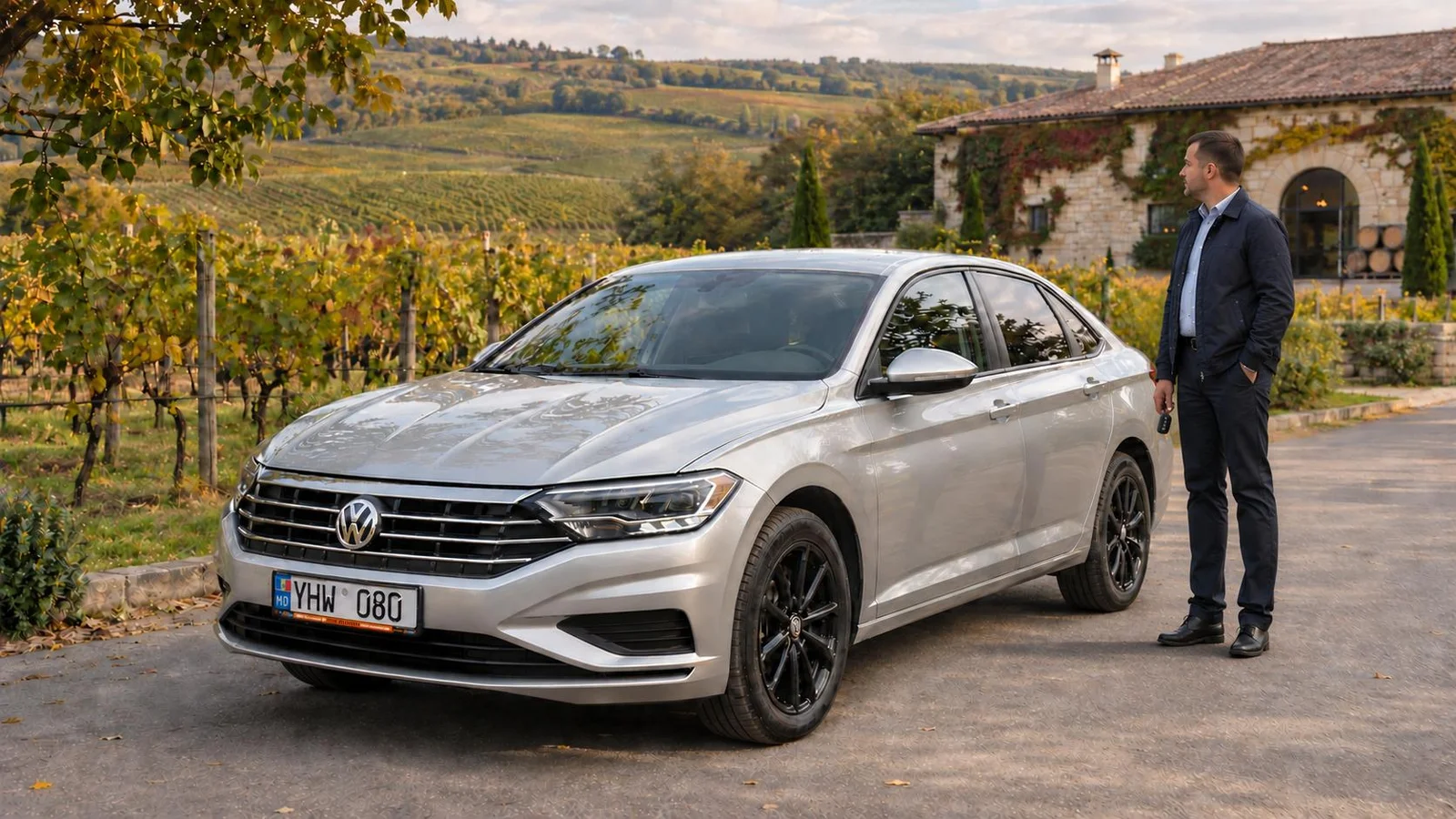
He drives, he waits: when a driver is all you need
A name board in the arrivals hall, a day around Moldova with a driver, and a clear answer: when is a driver enough, and when do you need a guide?
Read more →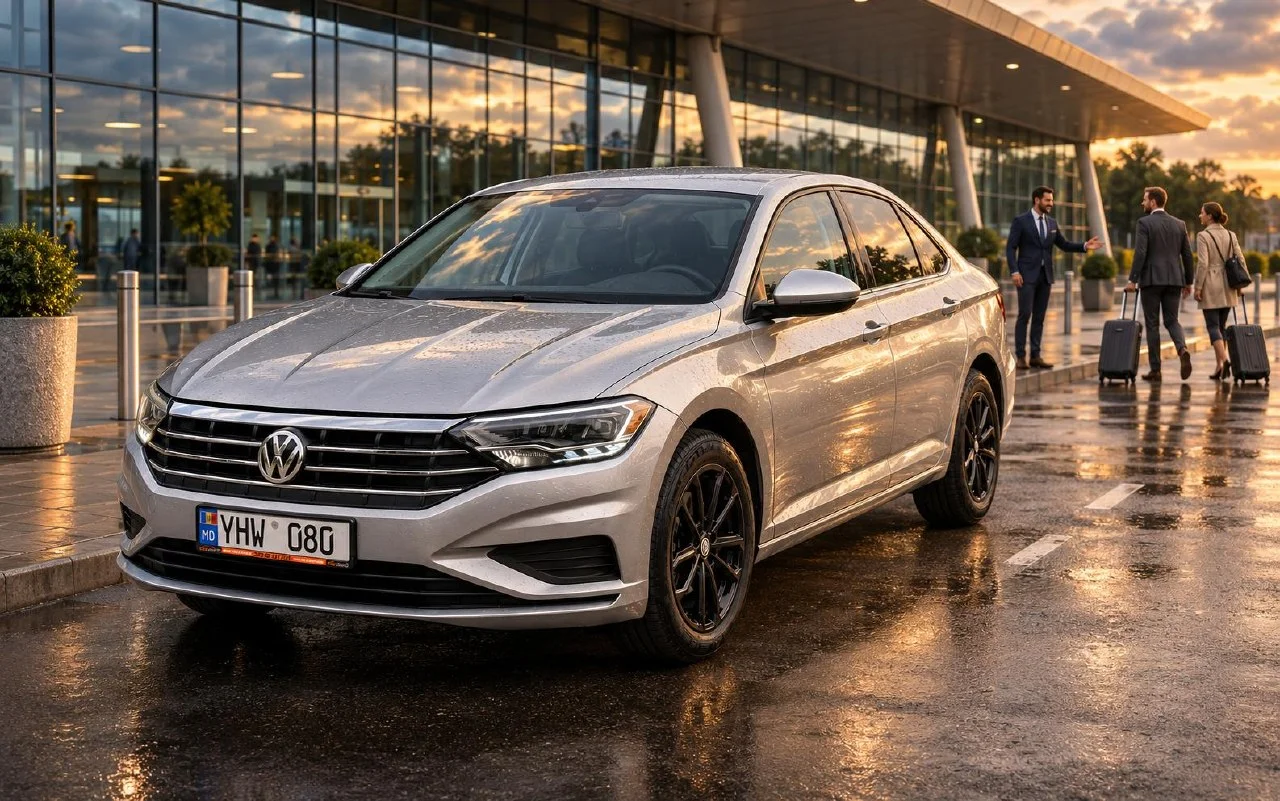
“We have a delegation flying in, twelve people, for three days. Meetings in Chișinău, one day in Bălți. We need transport.” I get emails like this too, even though I'm a guide and not a dispatcher. I forward them to my CarPoint team, and the team takes it from there. But since people ask me, here's how it works. That way your first email goes straight to the right address, with everything in it.
There are no prices in this article. For a single transfer the price is on the Transfers page, and you see it before you book. For a programme over several days, the total is worked out for that programme and confirmed in writing before the visit starts.
One person to meet at the airport, or a car for a single day: no back-and-forth needed. The Transfers page has a form for the airport, a trip to another town or a car with a driver by the hour. Fill it in, send it, get your confirmation.
A delegation doesn't work like that. There are several flights and a lot of guests, every day has its own schedule, and halfway through the visit someone will inevitably want a meeting moved by an hour. For bookings like these, the team has a separate process, explained in the section for companies, embassies and delegations. Cars with drivers for every day of the visit, following your programme, without a guide. This is how the team works with international foundations, embassies and companies.
Include these, and you'll get a quote rather than a list of questions:
The programme doesn't have to be pretty. A list in the body of the email will do. Whatever is missing can be added later: if you don't know the time of the return flight yet, the first two days can still be priced. There's just one address: transfer@carpoint.md. You can write in English, Russian or Romanian.
There are three classes. A car takes up to four guests and three large suitcases. A minivan takes up to seven guests and seven suitcases. For groups of eight or more there is a minibus for up to 20. You get as many vehicles as you need, each with its own driver.
I'm not mentioning suitcases for the sake of it. Four people with four large suitcases won't fit into a car, and people usually find that out in the arrivals hall. Tell the team how much luggage there is, and they'll pick a vehicle to fit it.
English-speaking drivers are available on request. One caveat, though: a driver is not a guide. He'll get you there, wait, help with your luggage and give you directions. He won't be telling you the country's history: that's a different service, and I'll get to it below.
The driver meets you in the arrivals hall with a name board and keeps an eye on the flight. A delay of up to an hour changes nothing. After landing he waits 60 minutes free of charge: passport control, the baggage belt, tracking down the colleagues who flew in a different cabin. A long delay is discussed separately, which is why the programme must include the flight numbers.
A delegation arriving on three flights two hours apart means three pick-ups, not one long one. The team assigns cars by flight, not by the guest list. Night flights are met too. Between 22:00 and 06:00 a night surcharge applies.
In Chișinău you can book a car with a driver by the hour, for four to twelve hours a day. The driver takes you to a meeting, waits, and drives you to the next one. Fuel, waiting and parking are already in the price, and the limit is 300 km a day. It's handy for a packed day with a long list of addresses.
A trip to another town is priced by the kilometre, and the price is fixed on confirmation. From Chișinău it's about 136 km to Bălți, about 101 to Comrat, about 178 to Cahul and about 78 to Tiraspol. A there-and-back trip comes with one hour of waiting at the other end. If the meeting runs longer, extra waiting is counted by the half hour, and you'll see that in the quote in advance. Pick-up is between 06:00 and 22:00.
Some days have meetings in two or three towns and a return to Chișinău in the evening. A day like that is priced by the hour, not by the kilometre. You don't have to work out which is which: send the route, and the team will price it the right way.
Transnistria works the same way as anywhere else. Everyone needs a passport, including the person who is “only going to sit in the car”.
Back to the email from the start. This is a sketch of how it might be laid out, not a quote.
Send it all in one email, and the team will quote a single price for the whole booking.
This is usually the part people are really writing about. Prices and the total are confirmed in writing before the start. The invoice is made out to your organisation. Payment is by bank transfer, with no VAT charged. If your organisation needs a contract, the team will draw one up.
One manager handles your booking. You agree any changes with them: a meeting that moves, an extra car for the evening, a guest who lands a day late. Nobody has to explain the programme all over again. In my experience, that does more for everyone's nerves than any discount.
Write early. A single transfer has to be booked at least 12 hours ahead, and a programme with several cars is best sent as soon as you know the dates.
Nobody will promise you a particular make of car in advance. You'll be told the class and the number of seats exactly. What actually pulls up at the hotel depends on the day. If it matters that the head of the delegation travels separately from the rest, say so: the answer is a second car, not a particular make.
There are English-speaking drivers, but that's an option at extra cost, and you need to ask for it in the first email, not on the day you arrive. Trips abroad, to Iași or Odesa, are possible too, priced on request. A night pick-up for a trip to another town can be arranged, but it isn't standard.
And one thing people rarely ask about, though they should. Private guests pay the driver on the day. Organisations work differently: invoice, bank transfer, paperwork. Don't try to mix the two. Your accounts department won't thank you.
Almost every programme has one. This is where I come in. Cricova is 10 km from Chișinău, Old Orhei about 60. That's half a day or a day, and flying home without seeing the wine cellars or the cave monastery would be a shame, if you ask me.
Option one: the driver takes your guests to a winery and waits, and the team books the cellars, a restaurant and the tasting in advance, at the same prices as booking direct, no mark-up. Option two: a guided tour, with stories, translation and answers to your questions. I guide in English, German, Russian and Romanian. For other languages, my team has guides working in Italian, Spanish, Turkish, Bulgarian and French.
The routes are in the tour catalogue. For one day, the most popular choice is Curchi, Old Orhei and Cricova. People also love Transnistria: in a day, guests see Bender Fortress and Tiraspol, and I take care of the border. I've written about the difference between a driver and a guide in “He drives, he waits”.
One last thing. The name board at the airport will say whatever name you put in the programme. Check the spelling. By the time you're in the arrivals hall, it's too late to fix.
Email your visit dates, guest numbers and day-by-day programme to transfer@carpoint.md. The team will confirm the total for your booking in writing.
A name board in the arrivals hall, a day around Moldova with a driver, and a clear answer: when is a driver enough, and when do you need a guide?
Read more →
Which winery should you pick for a day trip from Chișinău? Here is how the Cricova and Milestii Mici cellars differ, and why you might go to Purcari, Castel MIMI, Château Vartely or Mircesti instead.
Read more →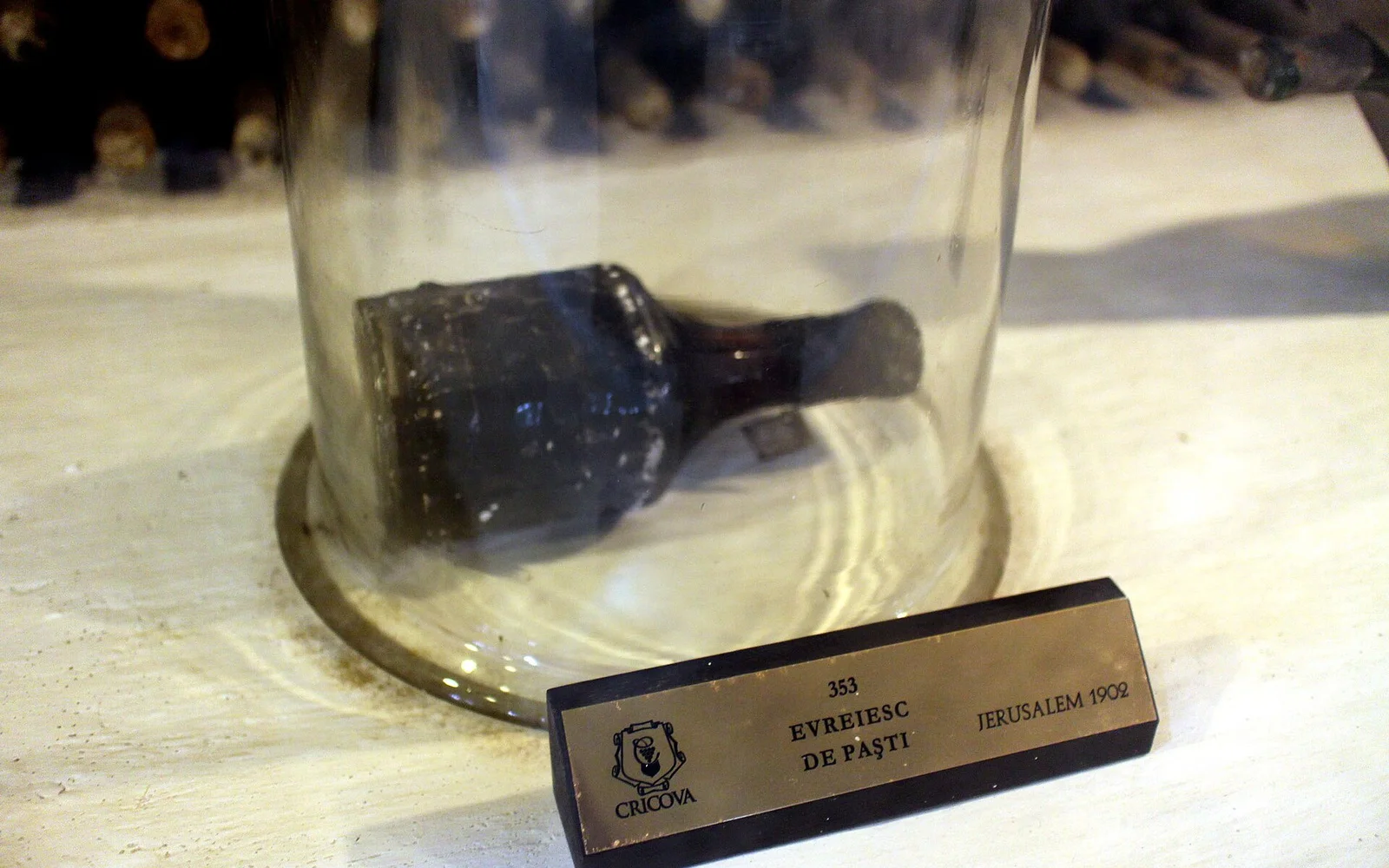
You can only get into Cricova on a guided tour. Here is how to book one, which tasting to choose and how to go there with just your own group.
Read more →